
KIEM:Living Lab Boerhaavewijk
A design research project building a 2050 neighbourhood vision from the everyday life of the residents.
Location: Schalkwijk, Haarlem
Year: 2022–23
Funding: Stimuleringsfonds Creatieve Industrie — Anders Werken aan Wonen
Project Partners: Gemeente Haarlem, Ymere, Elan Wonen, Pre-Wonen, Sint Jacob, DOCK, Wijkraad, Stichting SSHO, Stichting Samen
Team: Daryl Mulvihill, Elena Grimbacher, Alexander Perrounine
Project Type: Neighbourhood vision, Design research, Participatory Planning
Collaboration: AP+E
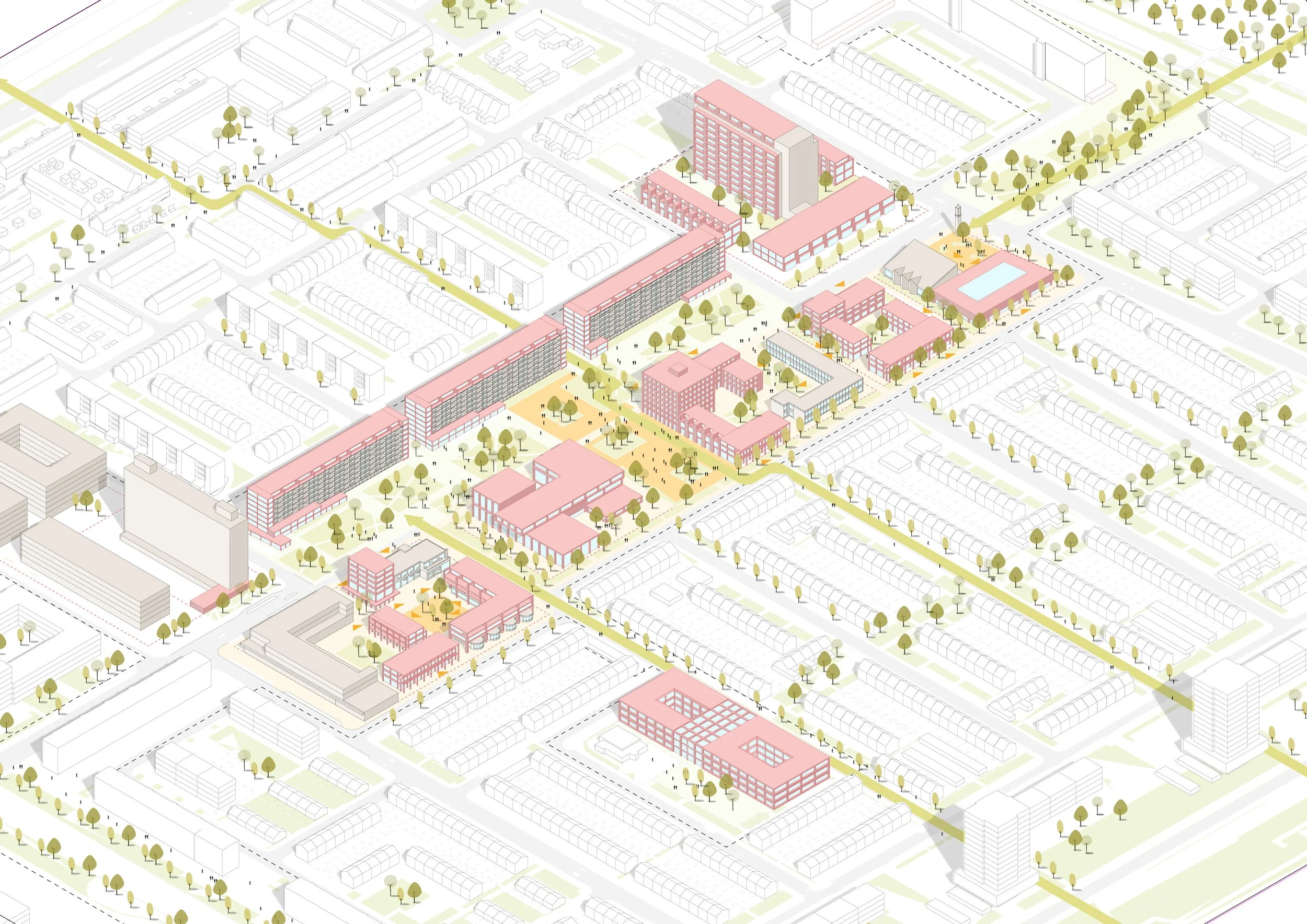
Boerhaavewijk was designed and built with the ideals of post war planning functions separated, car-centric. A strip of community buildings: schools, community centre, a church and some shops at the centre of the neighbourhood.
Many years on, the problems are familiar. The housing stock is ageing and energy-inefficient. The ground plane is dominated by cars and blank facades of garage boxes. Innovative educational buildings are often planned for demolition once their a singular function is no longer required. And between the strategic planning documents — Haarlem's Development plan 2050 — and the everyday life of the residents who live here, there is a significant gap.

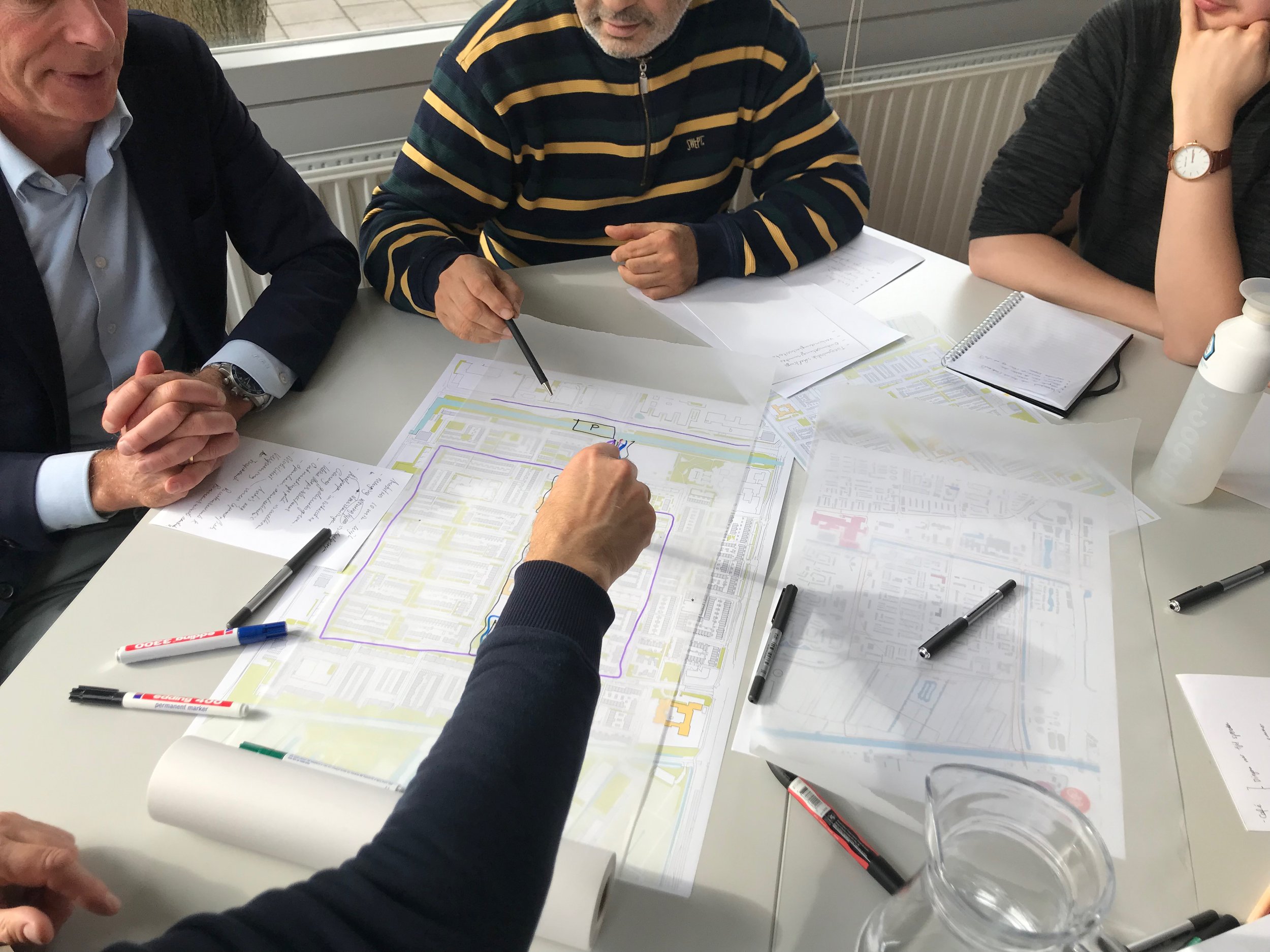
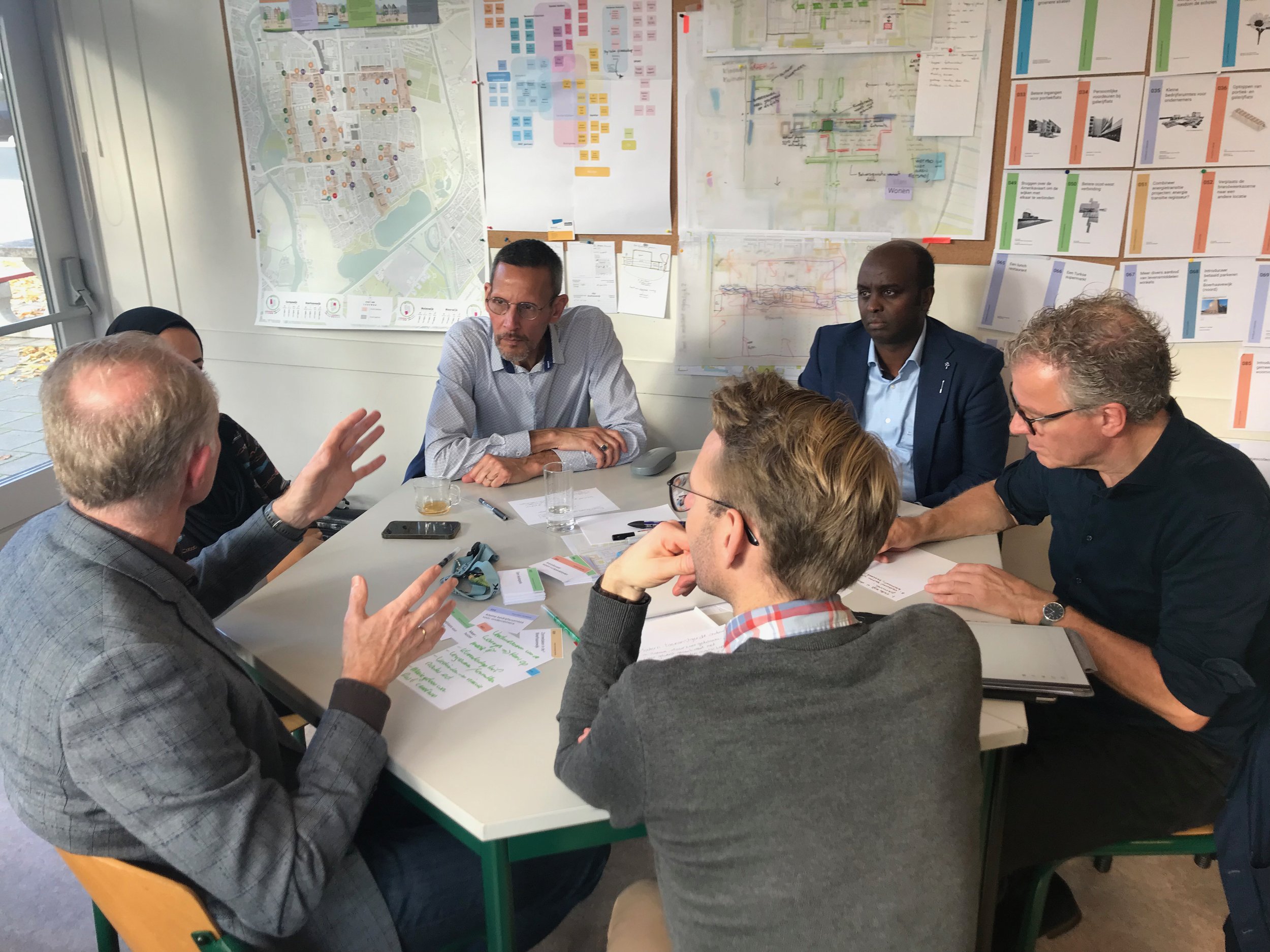
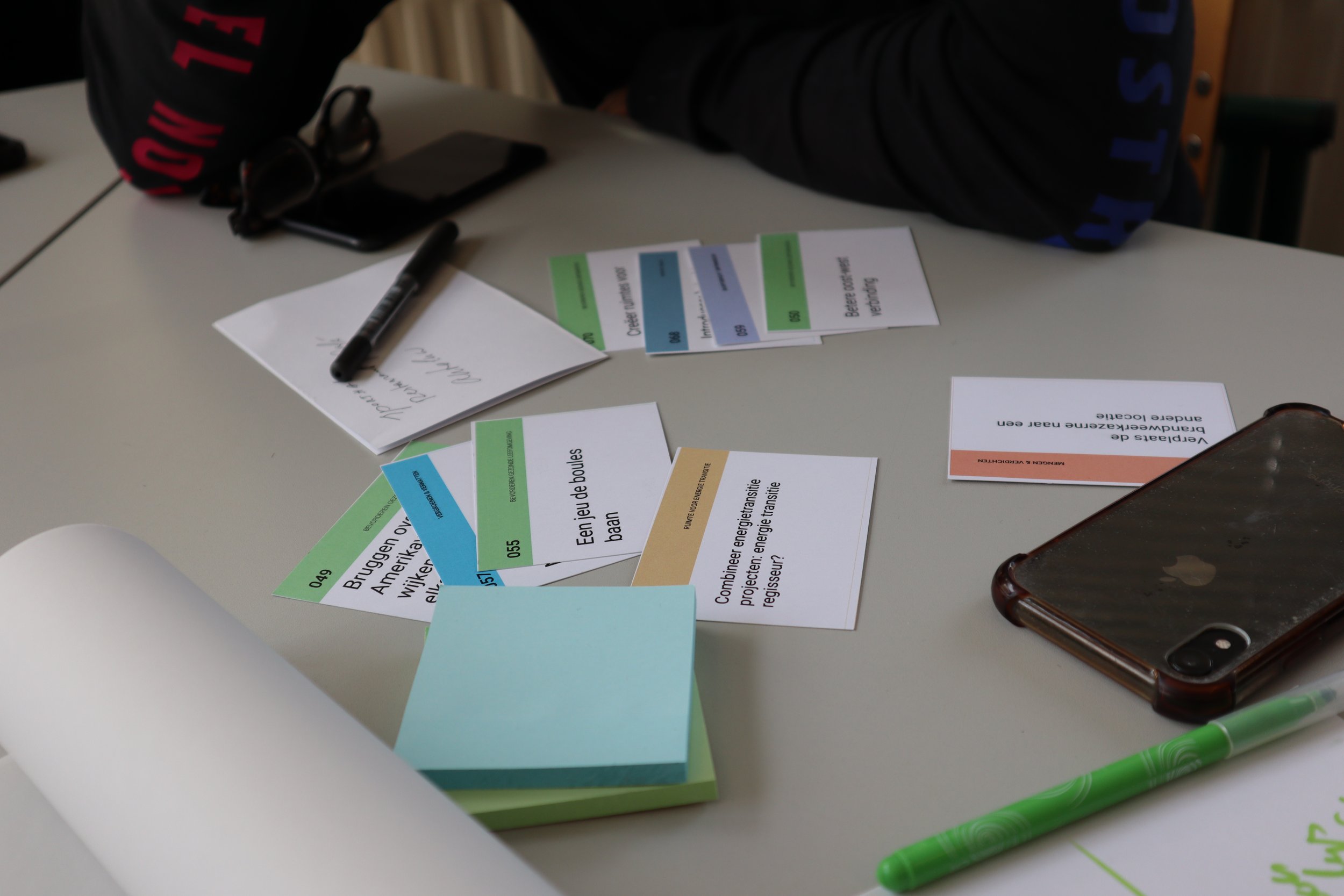
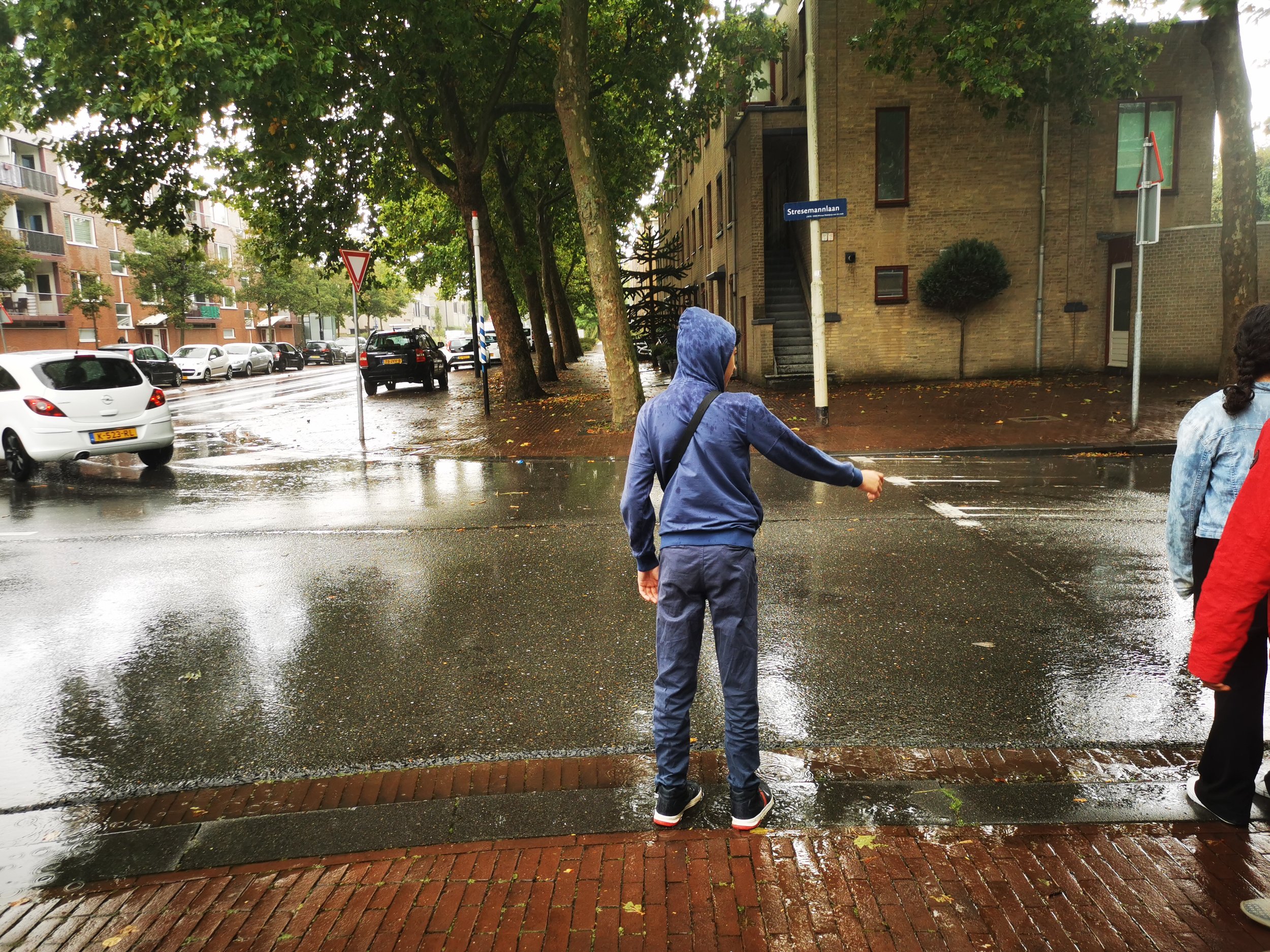
The Living Lab was designed to close that gap. Working from community centre Ringvaart at the heart of the Boerhaavewijk, and operating under the motto Waardeer, Verbind, Versterk — value, connect, strengthen — the project brought together housing corporations Elan Wonen, PreWonen and Ymere, the municipality, schools, welfare organisations, and residents over six months. The method was iterative: actor mapping first, to understand who was active in the neighbourhood and who was being left out; then workshops, conversations, design research, and scenario development.
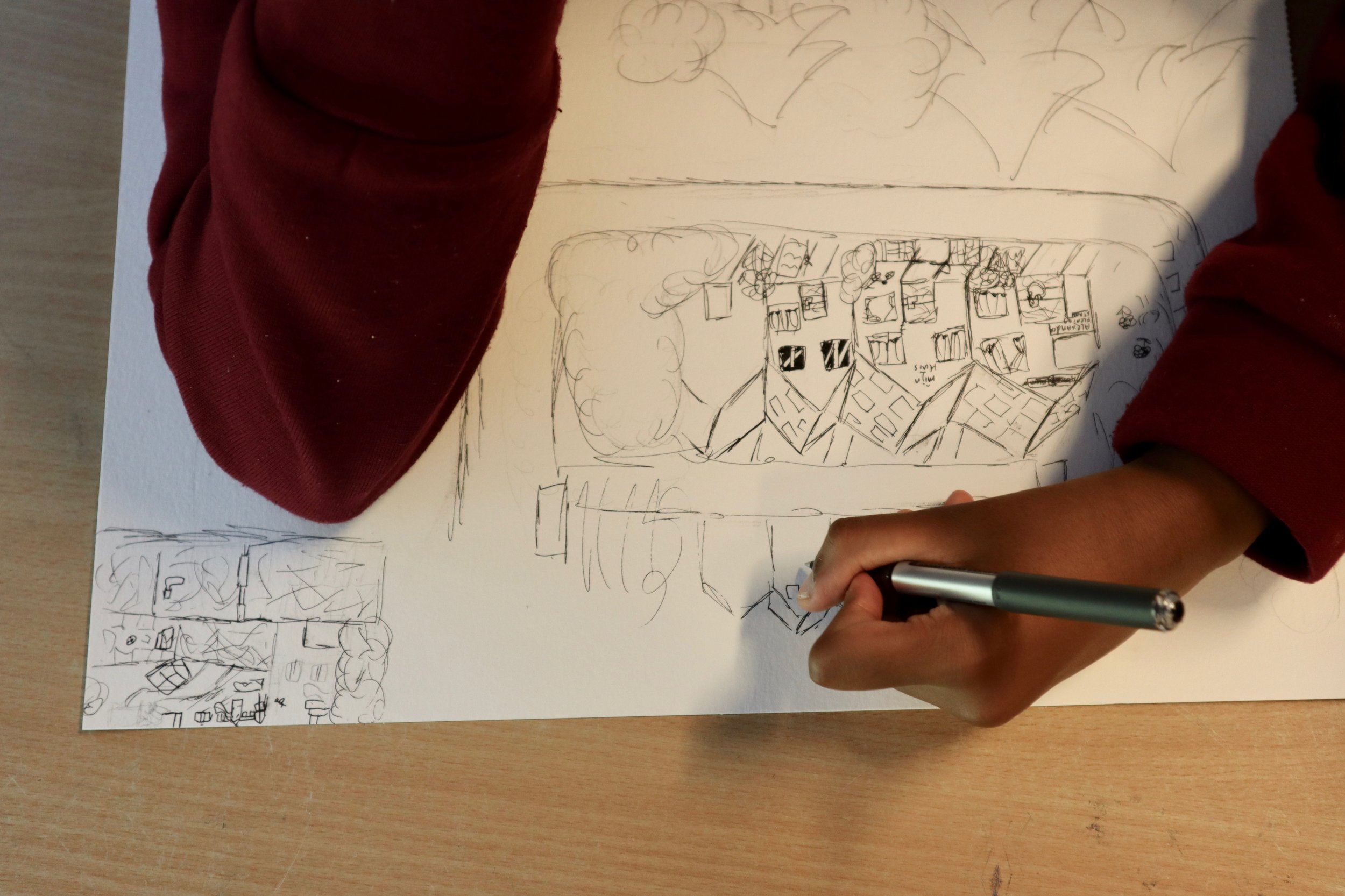
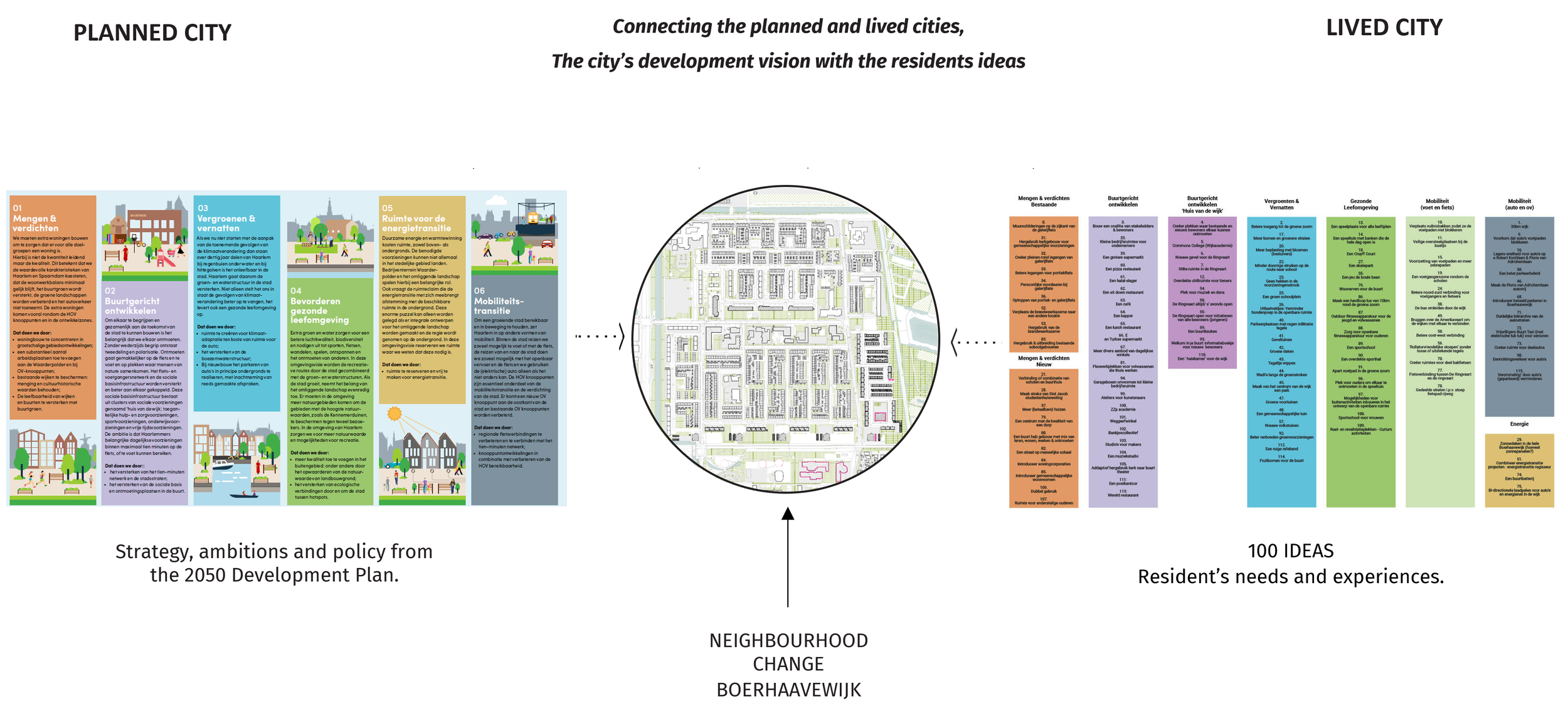
The process gathered over 100 ideas from residents, organisations, and partners throughout the neighbourhood, and linked each one to the six strategic themes in Haarlem's 2050 Development vision: mixing and densification, neighbourhood-oriented development, greening and water management, promoting a healthy living environment, the energy transition, and the mobility transition. The connection of the residents ideas with the higher level policy offers a way to link often abstract future planning ambitions to immediate everyday needs.
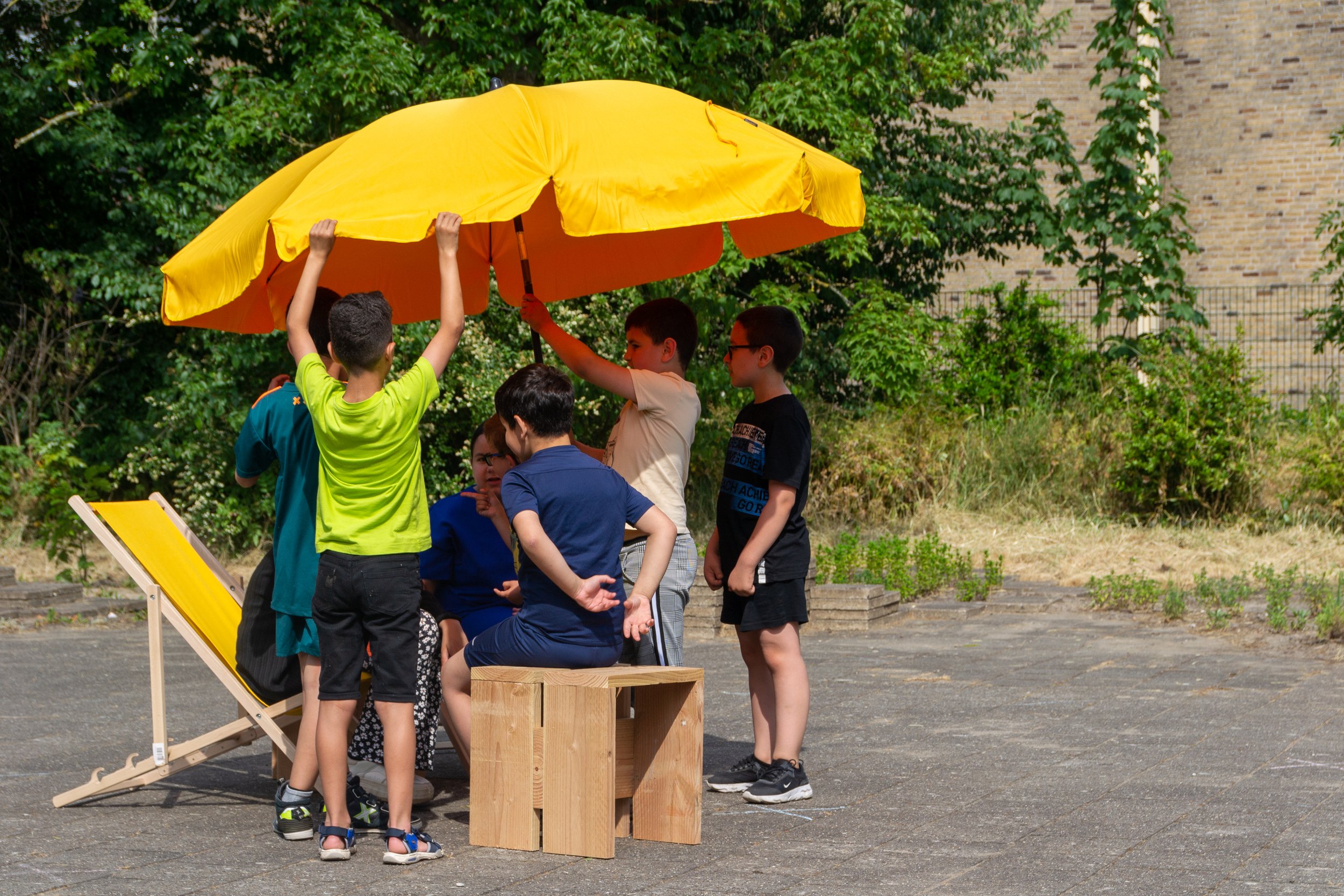
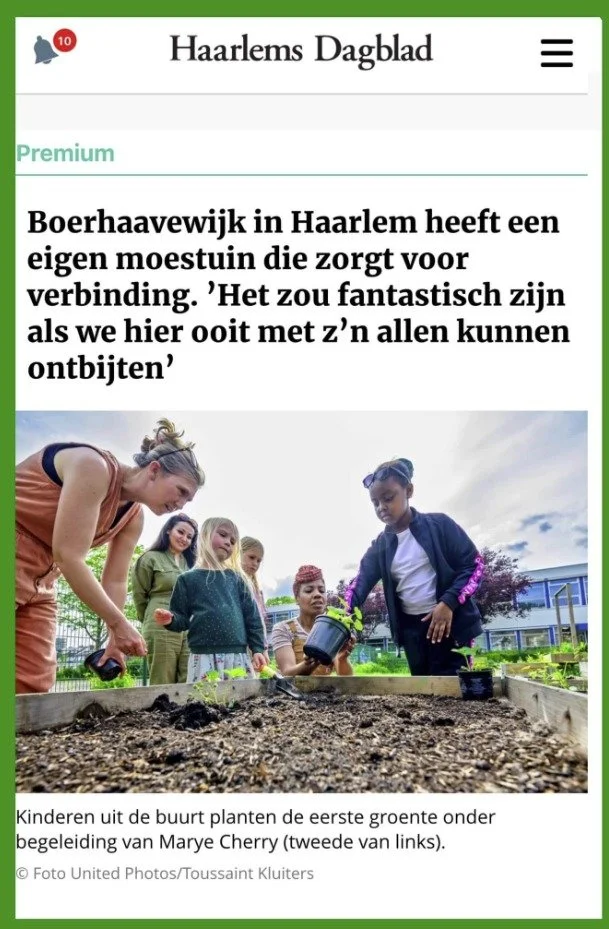
A first concrete outcome came from the transformation of a former schoolyard into an collective garden at the centre of the neighbourhood — a place for and by the neighbourhood, developed for Haarlems 2023 Open Architecture Day.