Schalkwijk Commons
A transformation strategy for a post-war district, from regional scale to building typology.
Type: Design Research, Vision for Neighbourhood Transformation, Densification Study
Date: 2021
Client: Gemeente Haarlem / Pre-Wonen
Team: Daryl Mulvihill, Emanuela Schrione
Collaborators: AP+E, Waag — Commons Lab
Schalkwijk Commons grew directly from a competition win. The studio's first-prize entry for Panorama Lokaal — a national programme focused on post-war neighbourhood transformation — had proposed a strategy for the Waddenbuurt at the heart of the district. Gemeente Haarlem and Pre-Wonen followed up with a direct commission: apply the same thinking to the fringes, the sub-neighbourhoods that the main development focus had not yet reached.
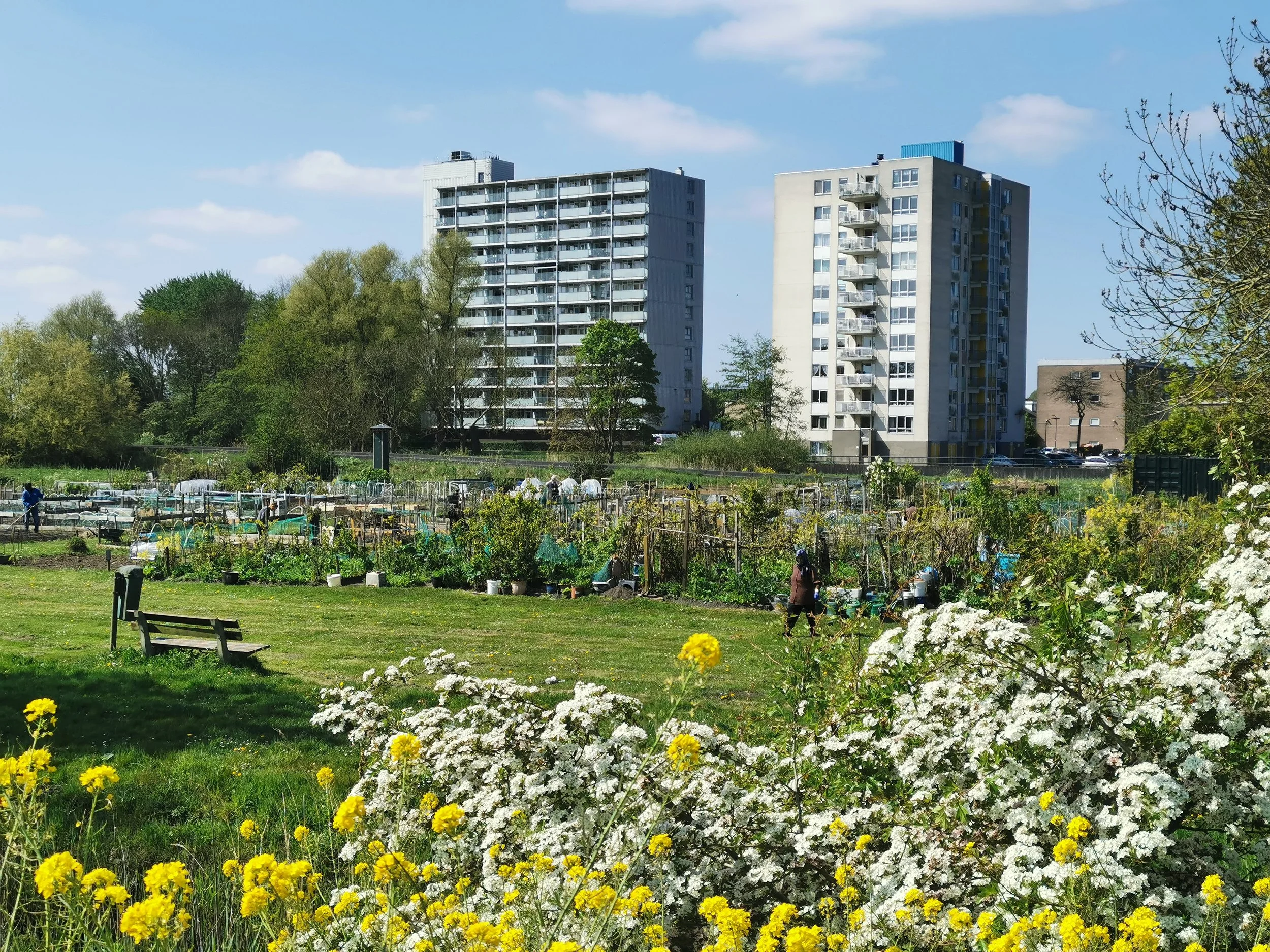
The underlying approach is permaculture urbanism: a framework that treats the neighbourhood as a self-regulating, adaptive system, and that considers the spatial, social, economic and ecological as a single integrated whole. It stands in deliberate contrast to the logic of the post-war neighbourhood itself — thoroughly planned, functionally separated, designed for a single use and a single moment in time. The rigidity of that original planning is exactly what makes these neighbourhoods difficult to adapt today. Permaculture offers the opposite orientation: observe what is already working, use edges and margins, connect rather than separate, build in feedback, value diversity.
The study was structured to mirror the scale of ambition of the original planners — who worked simultaneously from the regional green ring down to the individual dwelling. The work is categorised into five themes to help organise this.
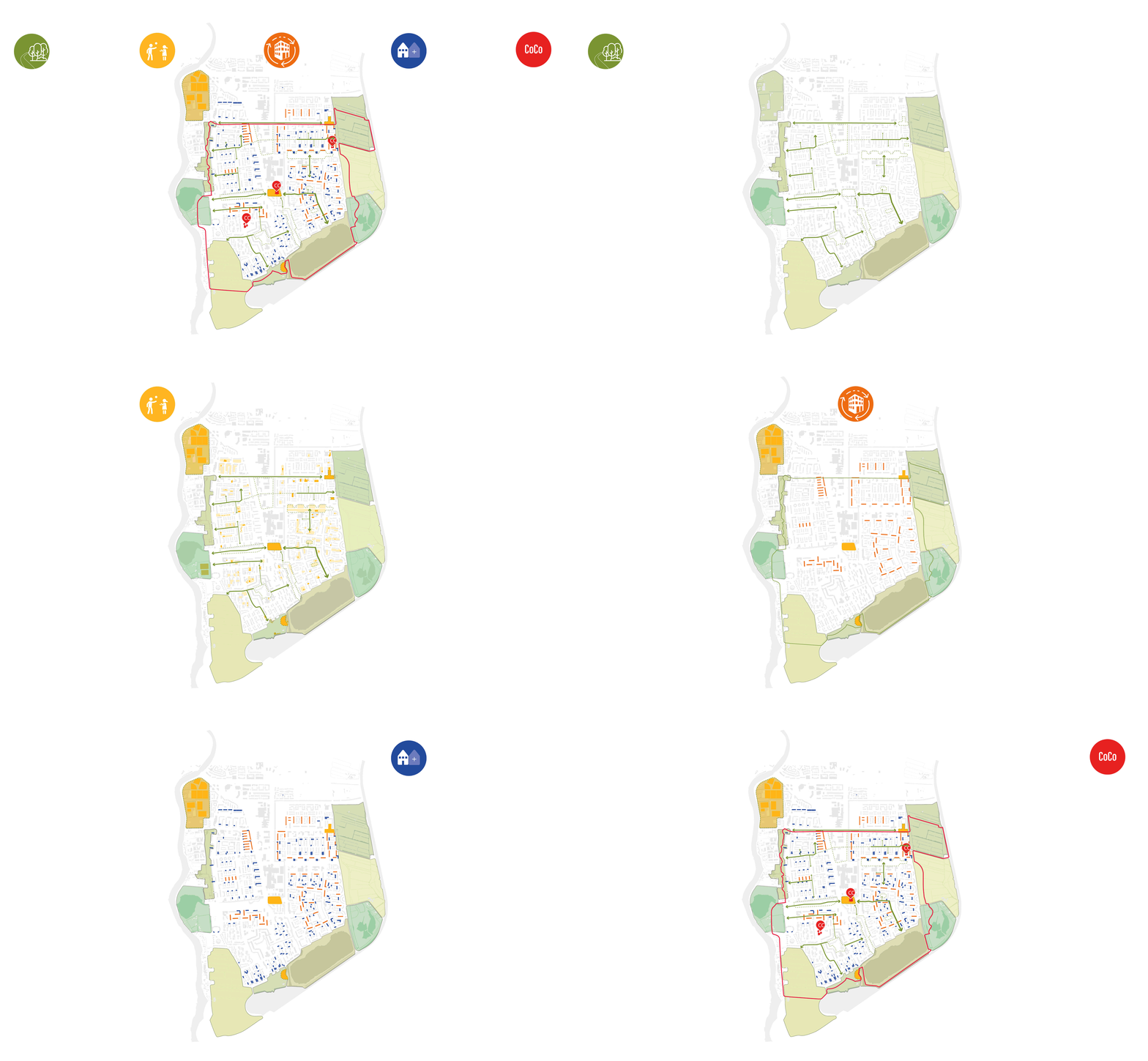
Connecting Green
Sports and Play
Building Transformation
Densification and Diversification
Social Capital

Connecting Green
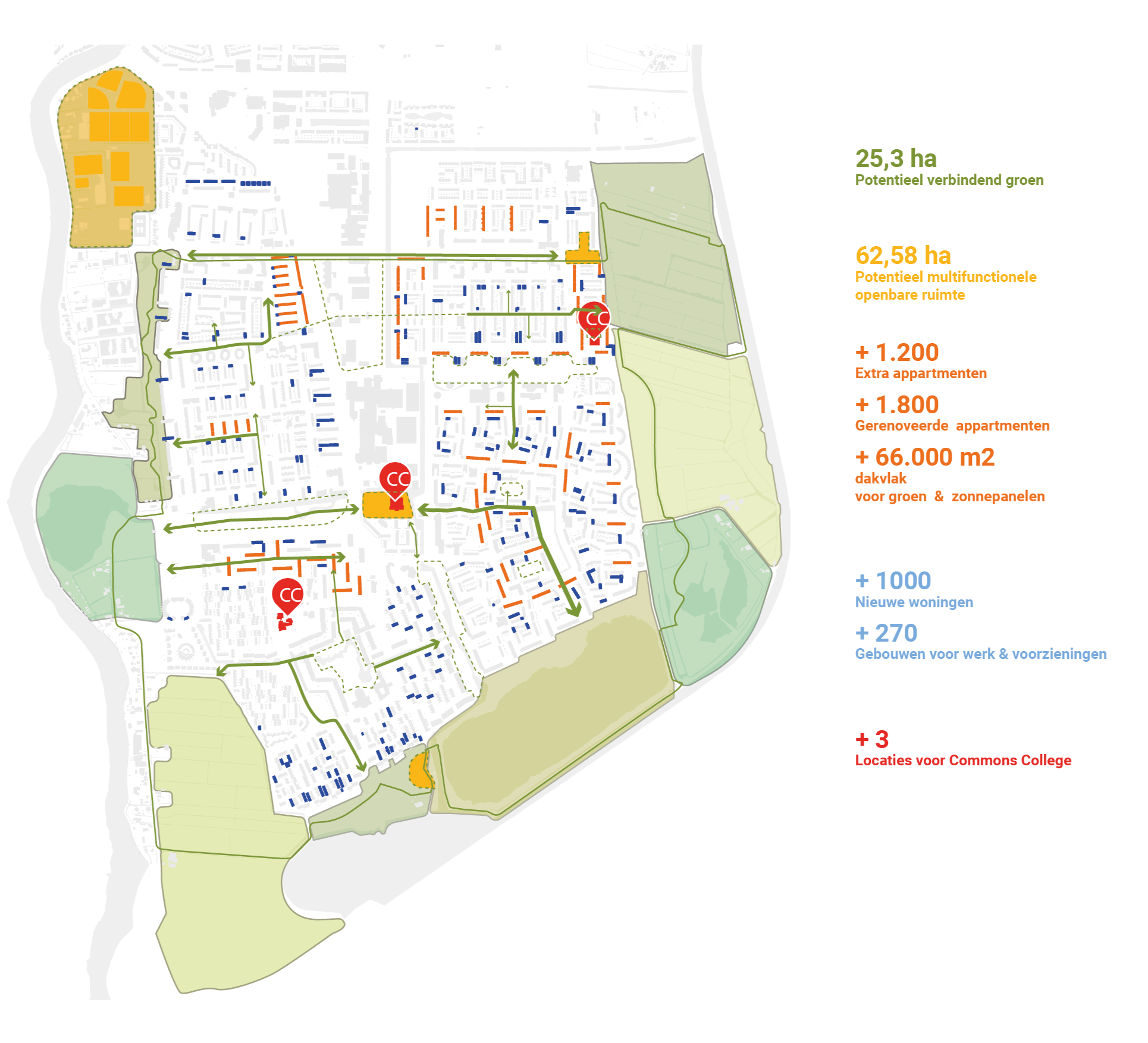
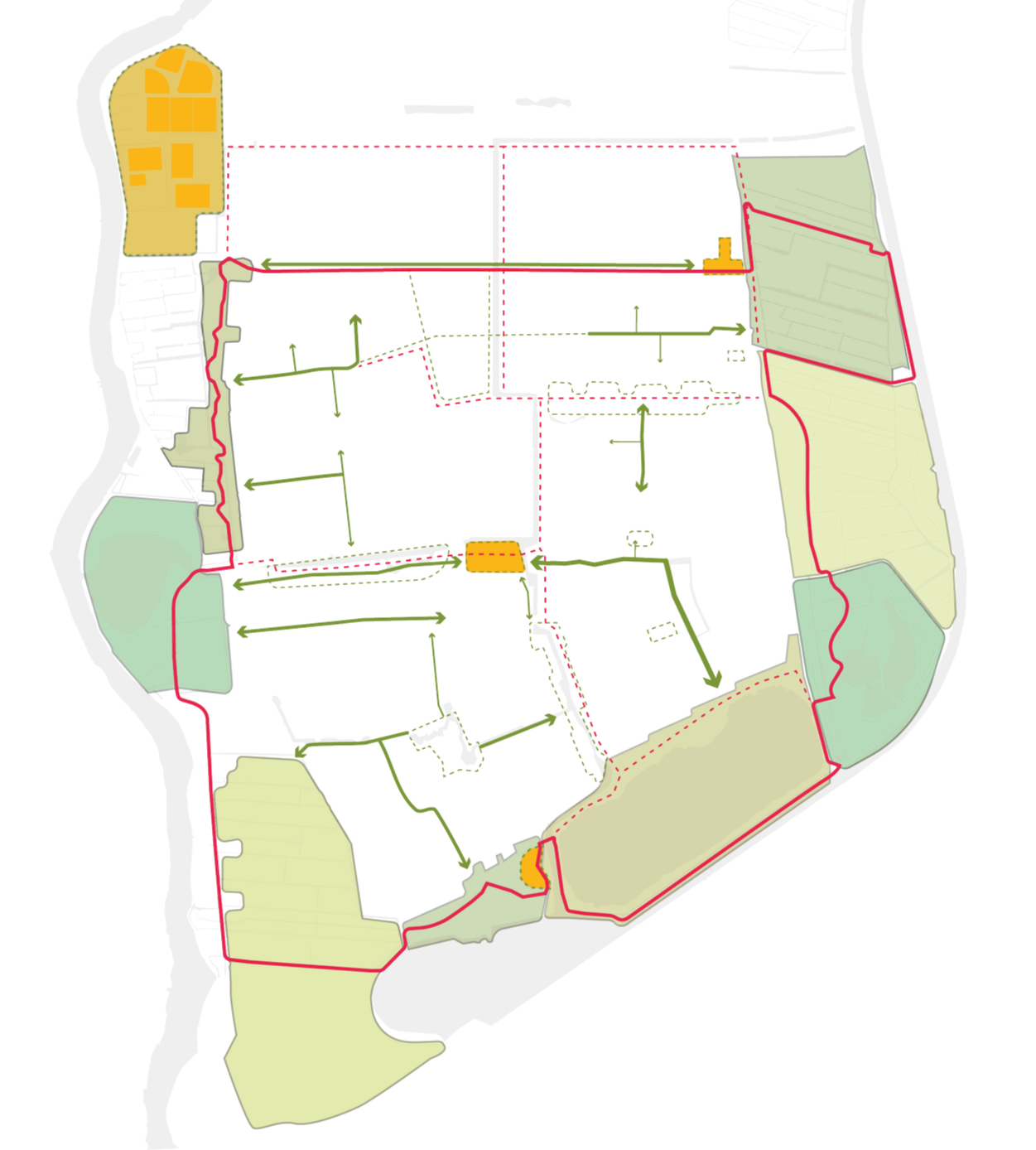
At the district scale, the strategy restores the green infrastructure: a large green ring surrounding Schalkwijk with wedges that connect inward to the neighbourhoods, and a clear hierarchy of public space built from the outside in.
Sports and Play
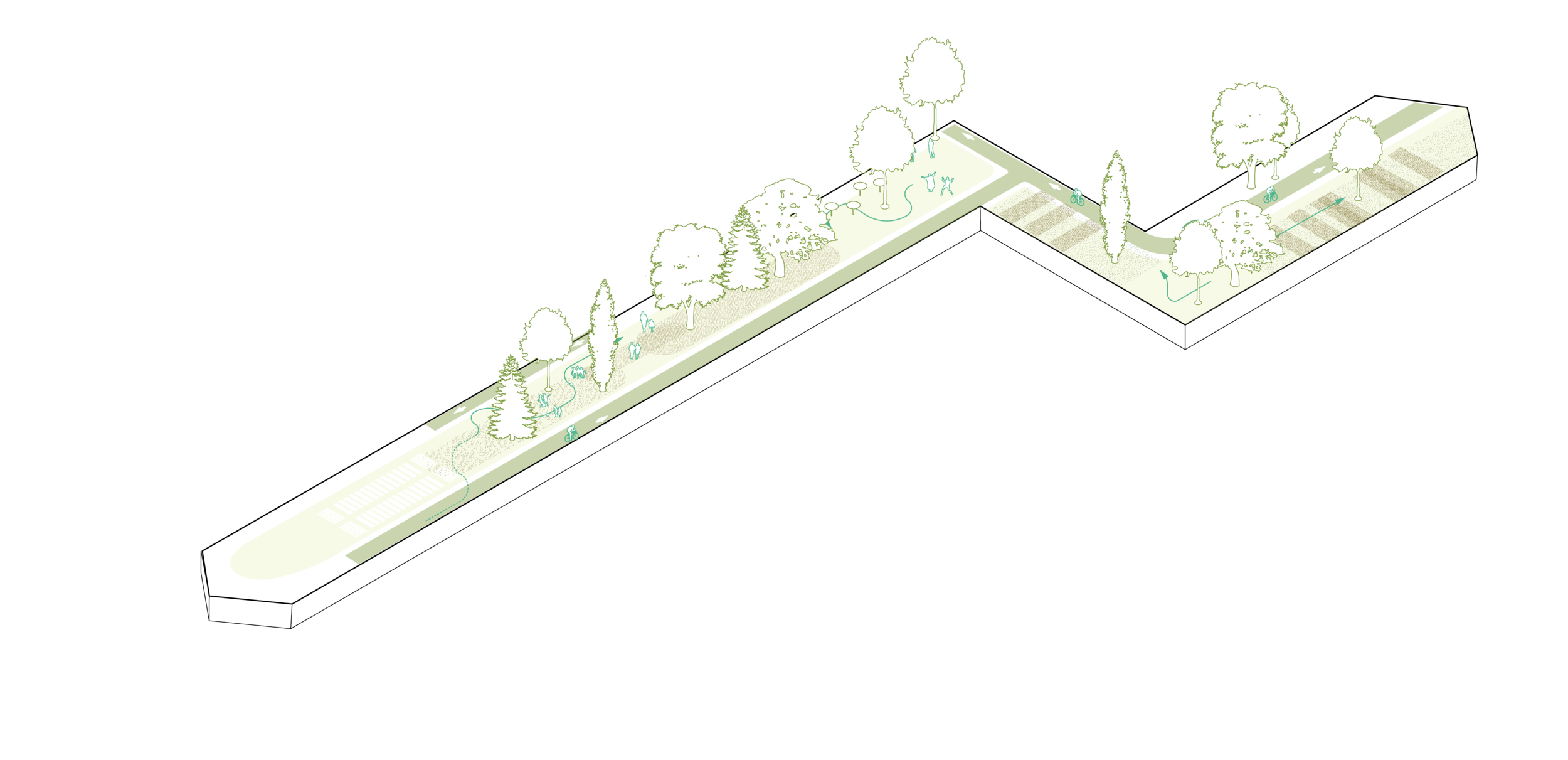
A more local layer of improved local play and sport facilities distributed across all four sub-neighbourhoods. Each neighbourhood gains a destination space — sports park, skate park, a central basketball and meeting point, a café-workshop, each connected to the green edge — anchor the system.

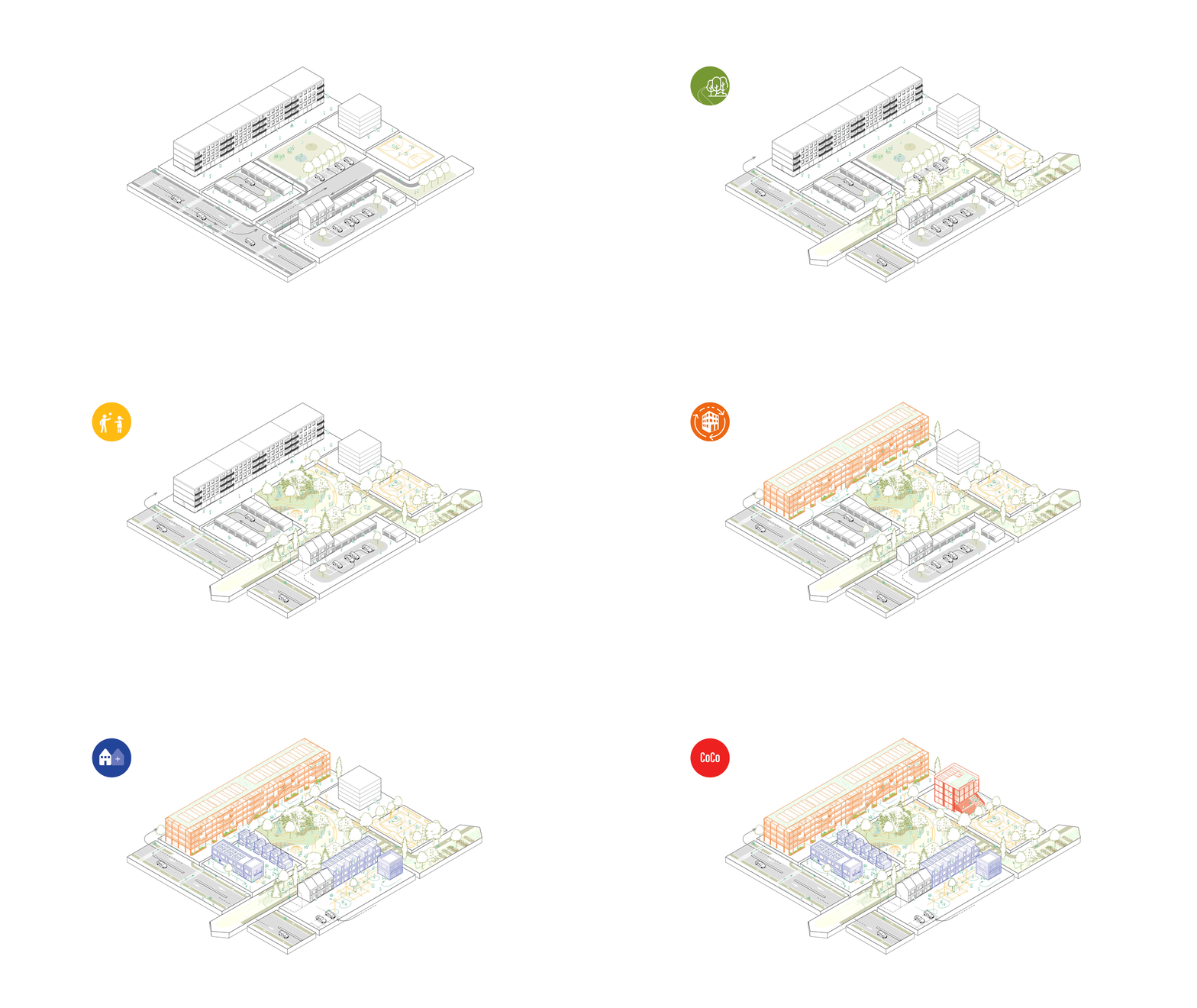

Building Transformation
The first typology is the portiekflat: the stairwell walk-up apartment block, found across the Netherlands, built without lifts for a population that has since aged. The study demonstrates how each block can be converted to gallery access with a lift added, storage moved vertically to free the ground floor for living, and an additional floor added on top — delivering more homes, better homes, and an accessible building for residents who can no longer manage the stairs.
Densification and Diversification
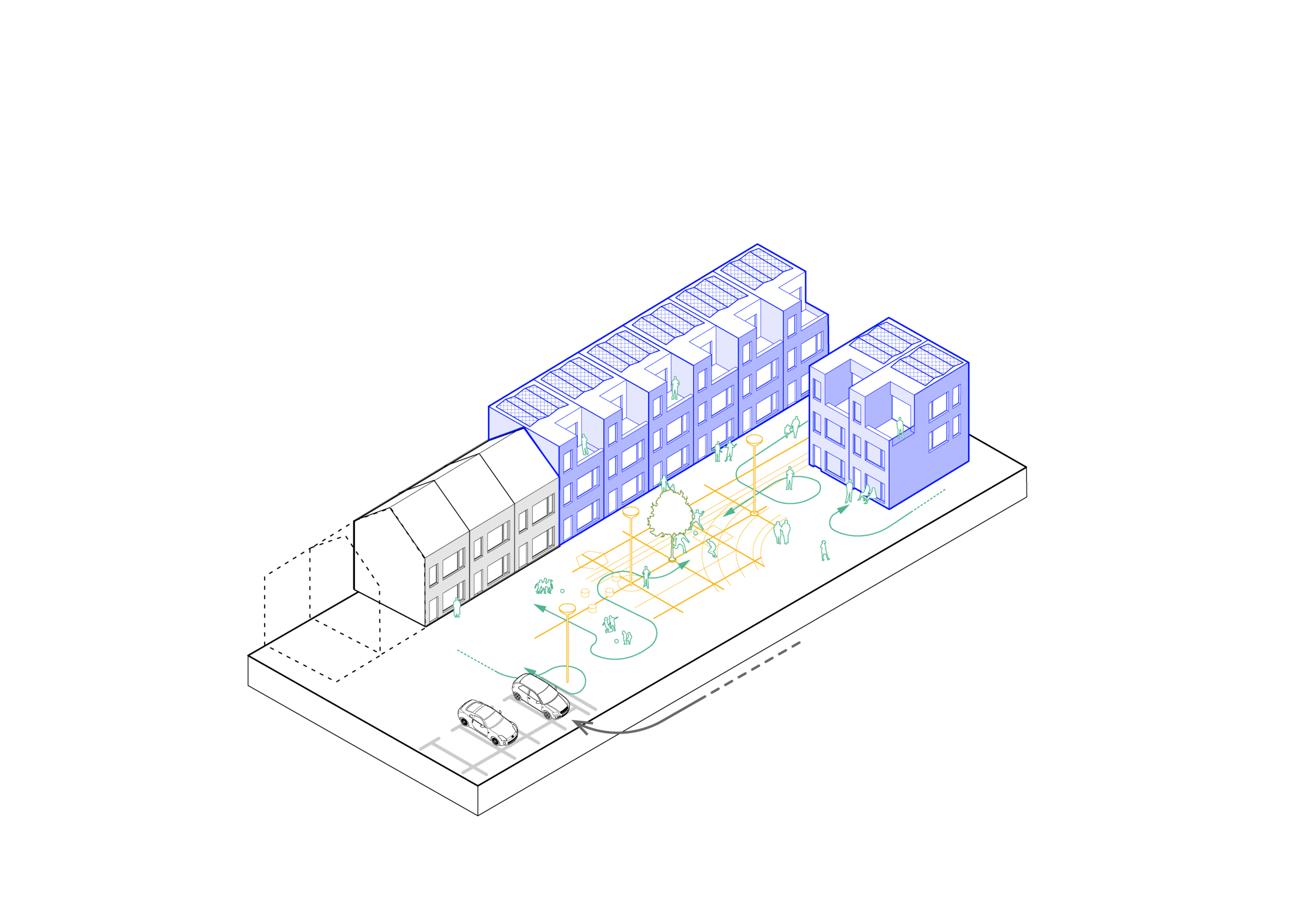
The second is the garage box. Across Schalkwijk's four sub-neighbourhoods, 1,733 freestanding garage boxes occupy 3.2 hectares — 30,550m² of single-use, car-oriented infrastructure from a planning era that is over. Their transformation potential, catalogued across five recurring typological configurations, is the subject of a separate project. Here, they are part of the larger densification argument.
Social Capital
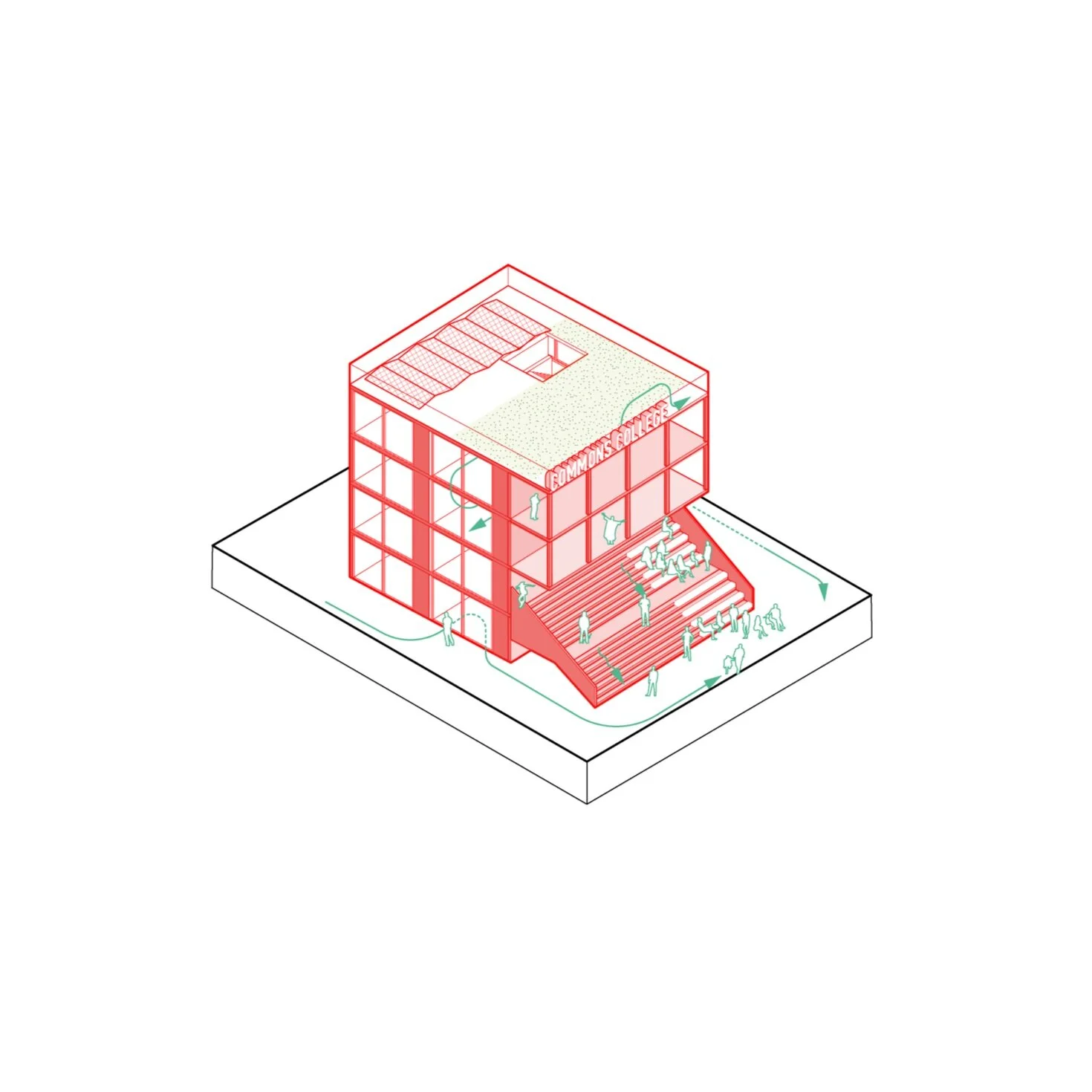
A number of former educational buildings are currently slated for demolition. In their transitional state, many have been informally occupied by community groups, secondhand shops, small sports and local organisations — precisely because they offer something the neighbourhood was too thoroughly planned to include: cheap, flexible ground floor space. The post-war planning allocated every function, leaving no room for the informal, the incremental, the entrepreneurial. These buildings, in their limbo, accidentally created it. The strategy proposes making that condition permanent: transforming the school buildings into Commons Colleges — owned by the community, managed collectively, providing the space for residents and entrepreneurs to start their own initiatives.
Accumulated across all five themes and the full district: 25.3 hectares of connected green space, 62.58 hectares of multifunctional public realm, +1,200 apartments through building reuse, +1,800 renovated apartments, +1,000 new homes through densification, +270 buildings for work and facilities, three Commons College locations. All without demolition. All working with what is already there.
The key lesson from the project is that transformation of post-war neighbourhoods can be carried out in a sensitive and incremental improving the existing conditions and adding new homes and meeting spaces. Our approach is published here as a transferable method — a demonstration that the spatial and social potential locked inside post-war neighbourhoods across the Netherlands can be identified, quantified, and unlocked from within.
This project is the first commissioned application of studio dmau's permaculture urbanism approach, developed originally in the Waddenbuurt Commons competition entry and applied here at district scale. The garage box typological study was developed further as a standalone project. The methodology was taken further in the Living Lab Boerhaavewijk, where it was developed into a full participatory research framework.